
Why Sports Are One of the Most Powerful Investments in Your Child's Future
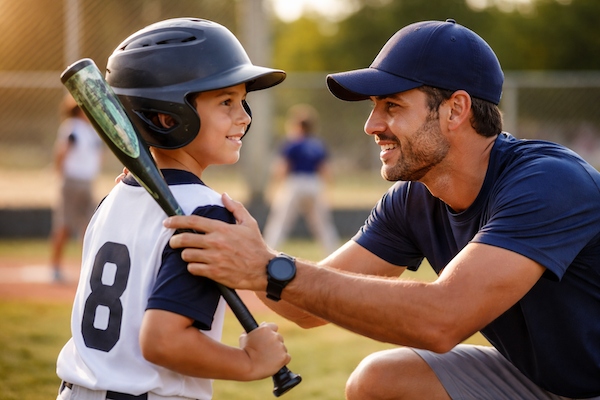
Today’s children are growing up in a world marked by rising anxiety, fear of mistakes, and increasing pressure to be perfect. Many young people struggle with stress, self-doubt, and the emotional weight of expectations. One of the most effective ways to counter these challenges is through sports, an environment uniquely designed to build strength, resilience, and confidence from the inside out.
From a developmental perspective, sports support healthy brain growth by strengthening emotional regulation, focus, and stress tolerance. Practices and competitions naturally place children in situations that require effort, patience, and adaptability. Over time, they learn how to manage nerves, respond to pressure, and recover after setbacks. These skills are foundational not only for athletics, but for school, relationships, and life beyond childhood.
At SPMI, we see time and time again that sports are one of the most powerful tools for preparing children to face the real world. Sports provide lessons that academia alone cannot. In school, the path to success is often highly linear. Students are given syllabi that act as road maps: complete assignments, participate in class, pass exams, and success is clearly defined. Life, however, does not work this way. There are no syllabi, no guaranteed outcomes, and no clear instructions. Children must learn how to navigate uncertainty, failure, and adversity skills that sports develop daily.
In psychology, this ability is called resilience: the capacity to bounce back after a setback. Sports place children in real-time situations where mistakes are unavoidable and outcomes are uncertain. A missed shot, a tough loss, or a challenging season teaches children that failure is not the end it’s feedback. This repeated exposure builds emotional toughness and adaptability, directly combating the anxiety and fear of failure that many children experience today.
Sports also help children develop real world skills such as accountability, teamwork, leadership, and perseverance. Athletes learn to show up consistently, accept coaching, and work toward long-term goals. These habits translate into stronger performance in school and later careers. Research published in the Journal of Adolescent Health shows that student-athletes tend to have higher academic achievement, better classroom behavior, and improved time-management skills compared to non-athletes.
Long-term benefits extend even further. Studies consistently find that former youth athletes are more likely to attend college, graduate, and earn higher incomes as adults. The mindset developed through sports grit, discipline, confidence, and resilience is highly valued in the workforce and often contributes to greater financial and professional success.
Most importantly, sports teach children how to face life with courage. They learn that discomfort is part of growth, that effort matters, and that setbacks can be overcome. For parents, investing in sports is not just about wins or performance, it’s about raising resilient, confident, and capable young people who are prepared not just to survive in the real world, but to thrive in it.