
Mental Toughness Secrets Athletes & Parents Can Learn from Navy SEALs
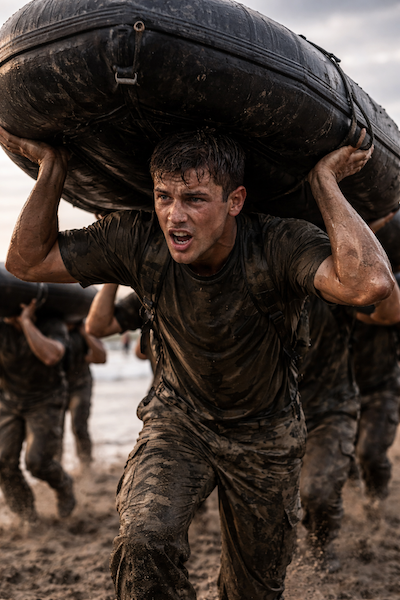
At SPMI, we help athletes master the mental game because the mind drives the body, and it must be prepared for every challenge, regardless of the stakes. One of the most powerful demonstrations of true mental toughness comes from the United States Navy SEALs. Throughout the years, we have been fortunate to work with several Navy SEAL trainees, helping them develop the mental resilience required for BUD/S training, particularly the demands of Hell Week, where composure, focus, and endurance are pushed to their limits. When working with Navy Seal Trainees, the objective is to develop individuals who can remain composed under chaos, precise under fatigue, and mentally sharp when the stakes are high.
While athletes are not enduring Hell Week, they are regularly exposed to their own high-pressure environments such as game-winning shots, final-round performances, championship moments, and expectations from coaches, teammates, and family. The battlefield may look different, but the nervous system response is remarkably similar.
Box Breathing:
One foundational technique Navy SEALs use to maintain composure is controlled breathing, often referred to as “box breathing.” This method involves inhaling for four seconds, holding for four seconds, exhaling for four seconds, and holding again for four seconds before repeating the cycle. In combat scenarios, this regulates heart rate, lowers stress hormones, and sharpens cognitive clarity. For athletes, this same tool can be transformative. A golfer standing over a short putt, a basketball player at the free-throw line, or a tennis player serving at 5–6 in the third set can use controlled breathing to slow the moment down. It creates space between the surge of adrenaline and the action that follows. By calming the body, athletes improve focus, stabilize mechanics, and quiet intrusive thoughts. Pressure does not disappear but it becomes manageable.
Chunking:
Another powerful mental strategy SEALs rely on is breaking overwhelming challenges into smaller, manageable pieces. During the most grueling phases of training, candidates don’t survive by thinking about the entirety of Hell Week. Instead, they focus on making it to the next meal, the next drill, or the next checkpoint. This “chunking” strategy prevents the mind from becoming flooded by the magnitude of the mission. Athletes can apply this directly to sport. Rather than obsessing over winning the entire tournament or achieving a specific score, they shift their attention to executing the next play, the next shot, or the next possession. This keeps attention anchored in the present moment, reduces anxiety, and promotes a process-over-outcome mindset. Championships are rarely won in one dramatic burst—they are built through consistent, controlled execution stacked moment after moment.
Discomfort Exposure:
Perhaps the most defining aspect of Navy SEAL mental toughness is their relationship with discomfort. Training intentionally exposes candidates to cold water, sleep deprivation, and extreme fatigue, not to break them, but to teach them that discomfort does not equal danger. They learn to function effectively even when conditions are far from ideal. For athletes, this translates to embracing fatigue late in games, staying composed after a bad call, and responding calmly after mistakes. When athletes stop resisting discomfort and instead lean into it, they build resilience. They recover faster from errors, maintain clarity under stress, and develop confidence in adversity.
What Parents Can Learn from Navy Seals:
Parents can also learn from this culture. The SEAL ethos emphasizes accountability, ownership, and calm leadership. In youth sports, parents often become emotional amplifiers, reacting intensely to outcomes, officials, or mistakes. Yet the most powerful role a parent can play is that of emotional stabilizer. Modeling composure after wins and losses, reinforcing preparation over results, and asking process-based questions help athletes develop internal confidence rather than external dependency. When parents remain steady, athletes feel secure. When adults control their emotions, young competitors learn to do the same.
Mental toughness is not loud. It is not dramatic. It is the quiet ability to stay clear-headed when others are overwhelmed. Through controlled breathing, focused execution, and a healthier relationship with discomfort, athletes and the parents who support them can begin to cultivate the same composure that defines elite performers.
If you would like to learn more about training your mental game like a navy seal please contact SPMI or schedule a free 15-minute consultation on our website. We look forward to speaking with you!